Committee

Dr. Detlef Hoyer
Dr. Detlef Hoyer has a PhD in theoretical electrical Engineering. He investigates Einstein-Maxwell equations derived from 5D Kaluza Relativity, where a scalar field occurs affecting both, gravity and electromagnetism. Recently he began to examine the 5D geodesic equation, which includes electomagnetic forces. Because geodesic equations are about acceleration and not about force, the term charge q over mass m has to be taken into account. Predictions of the theory are reduction of effective mass and a fifth force. Until it is not known, how to achieve those effects or even if they exist at all, his calculations aim for hints, how to arrange experiments for verification or falsification. Dr. Detlef Hoyer earned a college diploma in magnetism and low temperature physics in 1986. He completed his Ph.D. at the Hamburg University of Technology in 1992. Since then he worked as a software developer at a major German insurance company. In 2004 he started his research on Riemannian curvature of higher dimensional manifolds. Now he is an Alumnus of the Technical University of Hamburg in Germany and retired November 2024


Dr. Dou Zhang
Dr. Dou Zhang is an Assistant Researcher and M.S. Supervisor at Harbin Institute of Technology, China. Her research focuses on the mechanical behavior of shape memory polymer (SMP) composites and their application-oriented validation, with particular emphasis on constitutive behavior, thermo-mechanical coupling, and structure-function integration for deployable mechanisms. The SMP-based locking-and-release deployment mechanism developed by her team enabled the first dynamic unfurling of the national flag on China’s inaugural Mars mission, Tianwen-1. This achievement was selected as one of the “Top Ten Scientific and Technological Advances of Chinese Higher Education Institutions” in 2021.

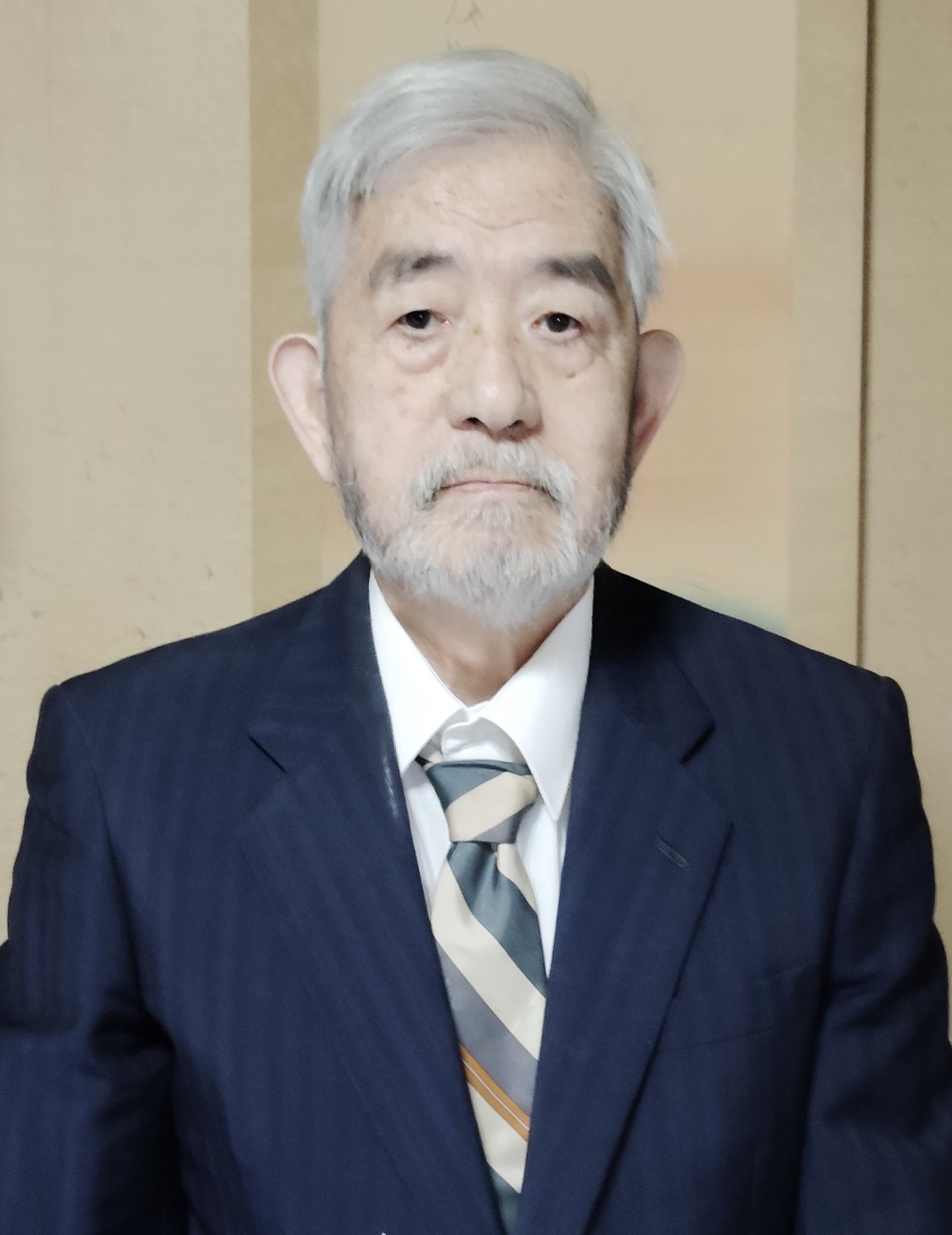
Katsuo Sakai
I was born on April 9, 1942, in Matsumoto City, Nagano Prefecture. In March 1960, I graduated from Suwa Seiryo High School and entered the Department of Applied Physics, Faculty of Science and Engineering, Waseda University. In April 1966, I joined Ricoh Co., Ltd., where I researched electrophotography technology. During that time, I made two very unique inventions. One is a one-shot two-color electrophotography method, which, like silver halide film, involves stacking two photosensitive layers with different light sensitivities, charging them positively and negatively, exposing them to a red-black image, and simultaneously creating positive and negative latent images of red and black, which are then developed with red and black toner. This device was exhibited at the 1980 Hanover Messe and received great acclaim. The second is a development method. Normally, in photocopiers, the developing material rubs against the surface of the photoreceptor. As a result, the latent image is disrupted, and high-resolution development is not possible. In my development method, the toner moves by hopping without touching the photoreceptor, and where there is a latent image, it is attracted to the latent image at the peak of its hopping motion and adheres to it. As a result, a very high-resolution toner image is developed. In 2006, I left the company and established the Electrostatic Power Generation Research Institute, where I am conducting research and development on electrostatic generators.